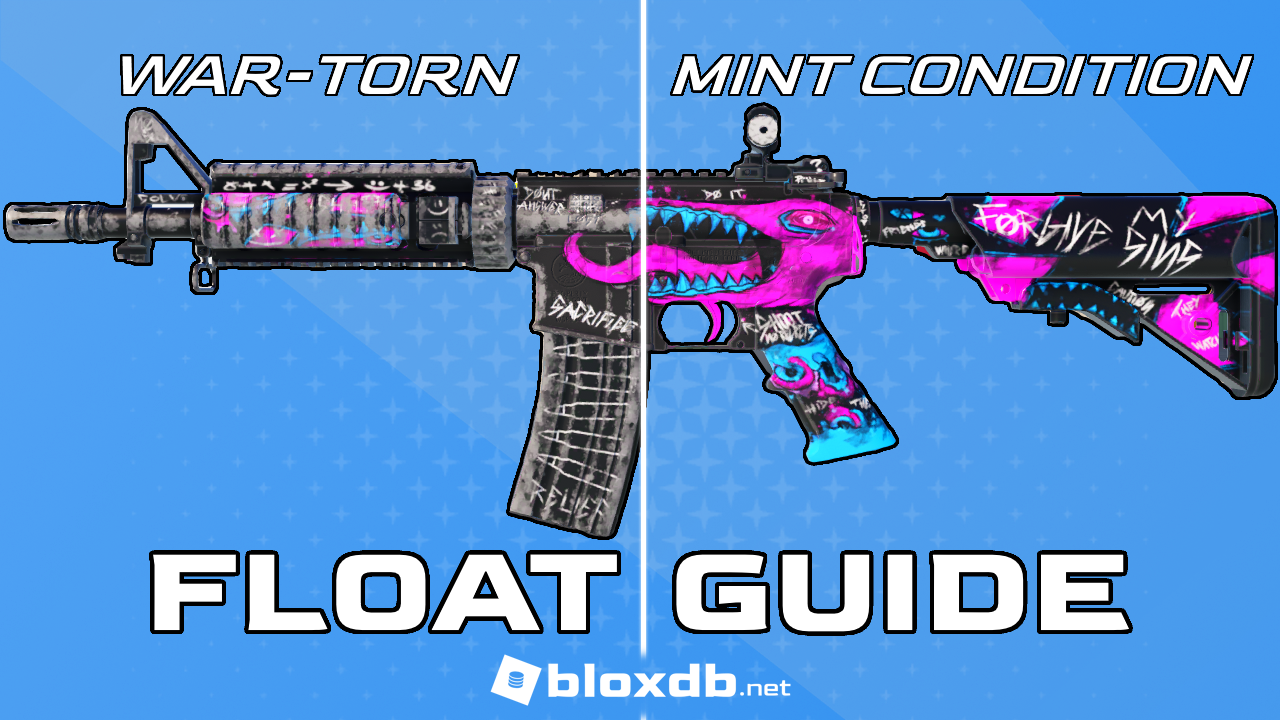
The Ultimate Float Guide for BloxStrike
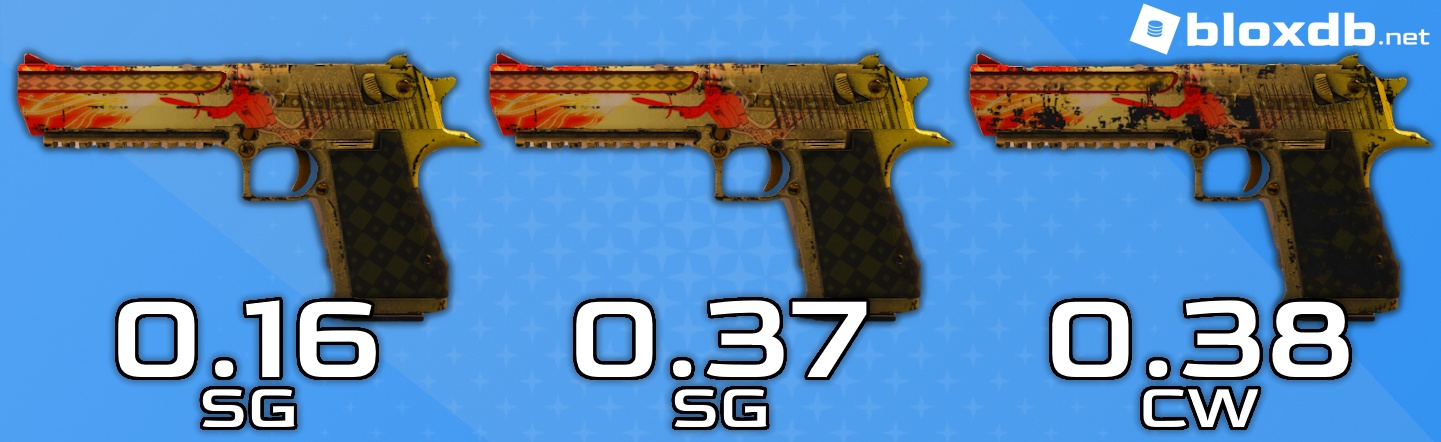
A 0.16 skin and a 0.37 skin can have the same scratches in BloxStrike. Move from 0.37 to 0.38, though, and the appearance can change noticeably. If you’re used to Counter-Strike’s wear system, that might come as a surprise.
Float determines a skin’s condition, helps shape trade-up results, and gives collectors something to hunt for. Here’s how it works and when those extra decimal places matter.
What Is Float in BloxStrike?
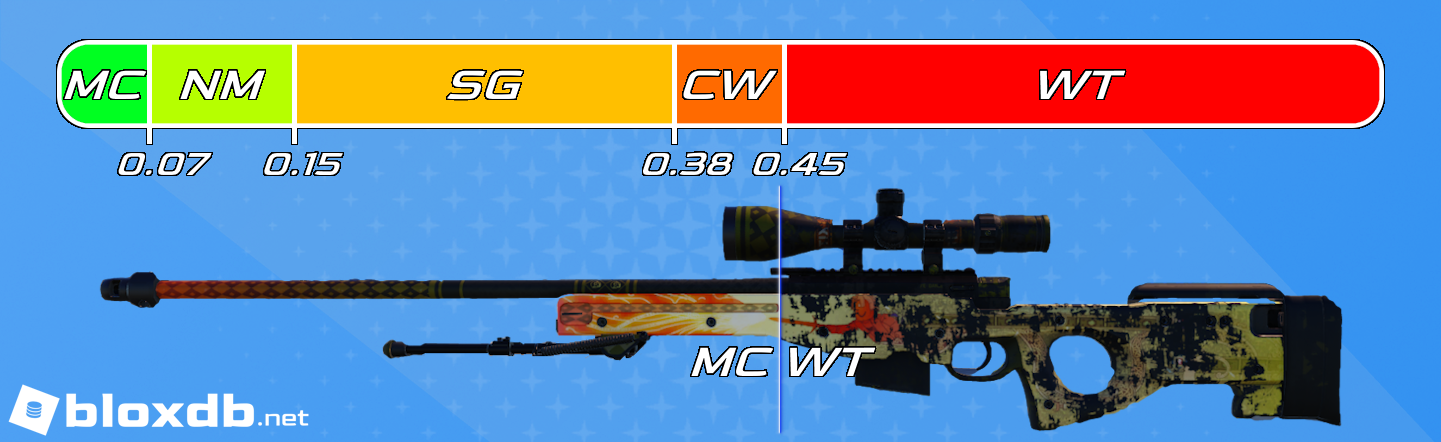
A skin’s float is a decimal number on a scale from 0 to 1. Lower numbers fall into cleaner conditions, while higher numbers fall into more worn conditions. Each condition covers a specific range.
Why Different Floats Can Look Identical
In Counter-Strike, two copies of the same skin can show different amounts of wear within the same condition. A Field-Tested skin near 0.15 can look noticeably cleaner than one near 0.38.
BloxStrike uses predetermined wear appearances for each condition. Two copies of the same finish at 0.16 and 0.37 are both Standard-Grade and use the same wear appearance. The difference in float alone won’t give the 0.16 copy fewer scratches.
At 0.38, the skin crosses into Combat-Worn and switches to that condition’s appearance. That small numerical jump can make a much bigger visual difference than moving across most of the Standard-Grade range.
If you’re buying a skin to use in matches, inspect the condition you want first. A lower float within that condition may interest a collector or help with a trade-up, even when it gives you the same visible wear.
Can a Worn Skin Look Better?
Lower float doesn’t always mean you’ll prefer the look. Some finishes change in interesting ways as their condition gets worse.
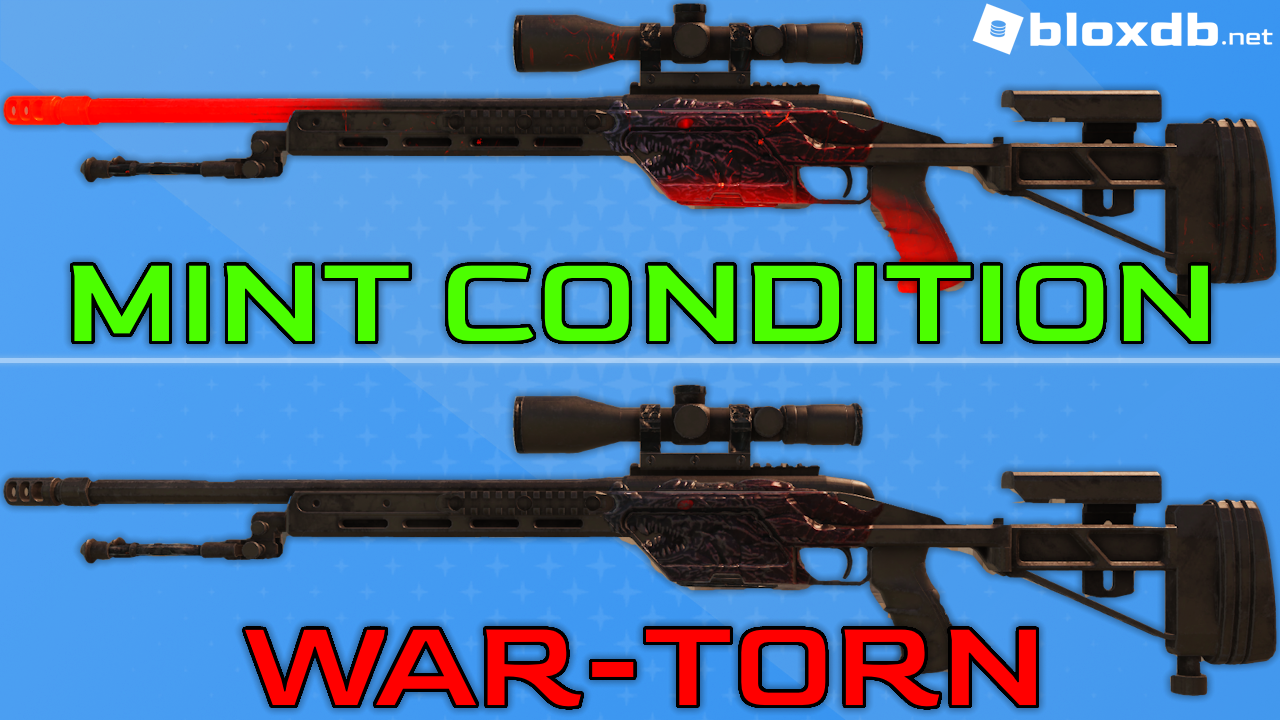
Take the SSG-08 | Onyx. In Mint Condition, it has prominent red accents on the barrel, grip, and scope. In War-Torn, those red accents disappear while the main artwork remains. Personally, I prefer that version.
How Float Matters in Trade-Ups
Trade-ups exchange 10 skins of the same rarity for one skin of the next rarity. This is where the exact float becomes useful, even if two input skins look identical.
Lower input floats help produce a lower output float. The output skin’s allowed float range also matters, so check both the inputs and the possible outcomes when planning a contract.
For an output that supports the full 0-to-1 range, 10 Mint Condition inputs can produce a Mint Condition result, while 10 War-Torn inputs can produce a War-Torn result. Float-capped finishes need extra attention.
What Is a Float-Capped Skin?
A float-capped skin has a restricted float range. Its lowest possible float may sit above Mint Condition, or its highest possible float may stop before War-Torn.
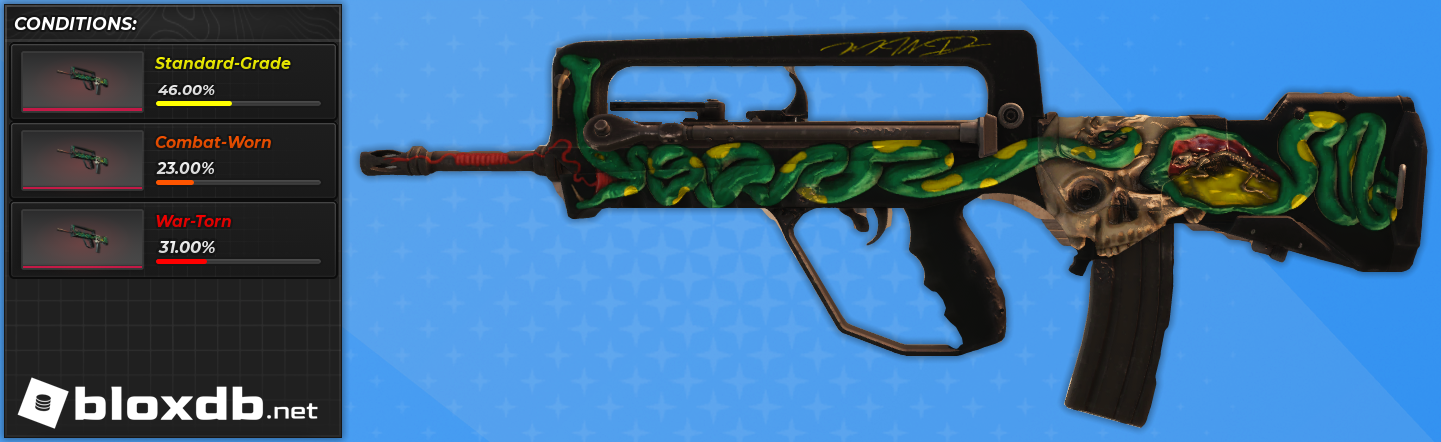
The FAMAS | Mind is an example whose best available condition is Standard-Grade. Even a contract made with Mint Condition inputs can’t produce a Mint Condition Mind, because that condition falls outside its allowed range.
High and Low Float Leaderboards
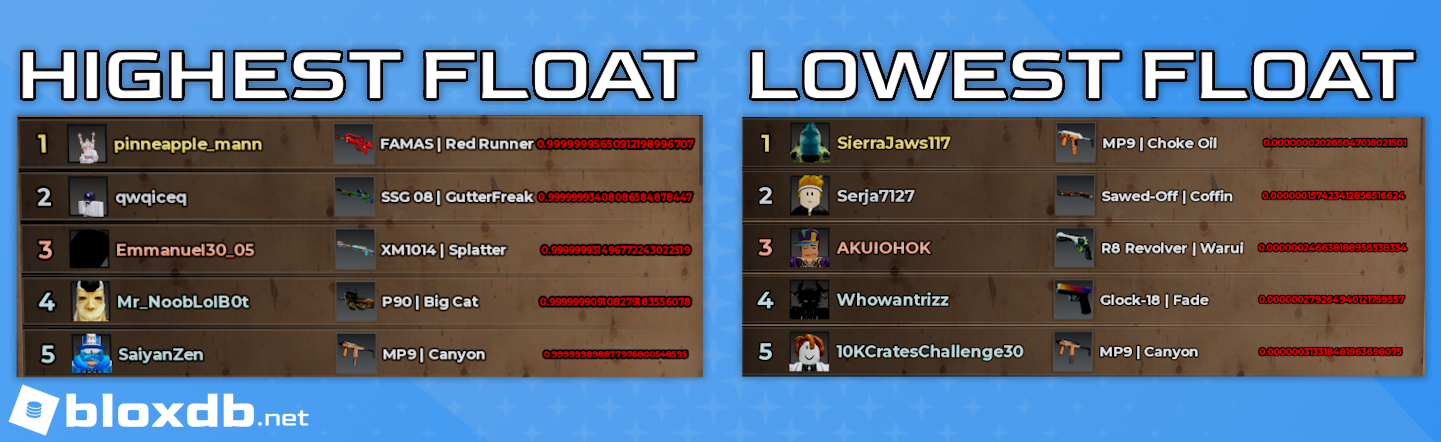
In the trading area, two leaderboards track extreme floats. One lists the 25 lowest floats in the game, and the other lists the 25 highest.
Collectors may pay extra for these items because of their position on the board. A float close to 1 can attract attention just as a float close to 0 can. The skin, its rank, and the buyer’s interest all affect what someone will offer.
What About “Funny” Floats?
Some players collect floats with recognizable digits, such as values beginning with 0.67, 0.69, or 0.420. You’ll often hear these called “funny floats.”
They can appeal to the right collector, especially when the full number has a memorable sequence. Most buyers will still focus on the skin and its condition, so those digits alone may attract little or no extra payment.
Found an unusually high, low, or funny float and want a second opinion? Join the bloxDB Discord and show us the skin and its full float value.